Helium is one of the most strategically critical industrial gases in modern manufacturing, and one of the scarcest. Unlike other gases, helium is non-renewable, extracted from finite natural gas reserves, and subject to volatile pricing and supply chain disruptions. Once released, it is effectively lost: helium escapes the atmosphere over time and cannot be economically captured again at scale. That combination of finite supply, geographically concentrated production, and volatile logistics is why prices and availability can swing sharply.
Beyond familiar uses such as balloons or shielding gas in welding, helium is a foundational input for high tech industries. It supports the medical industry with MRI cooling, provides inert atmospheres in semiconductor manufacturing, and plays a role in space applications and emerging technologies such as quantum computing. Multiple market analyses forecast strong demand growth into the 2030s (driven in large part by chip manufacturing) at a time when supply disruptions still occur.
Yet in many industrial processes - especially leak testing - helium is used once and then vented. A Helium Recovery Unit changes that.
This article explains what helium recovery units are, how they work, and why engineering managers, procurement teams, and sustainability officers across sectors should care about helium gas recycling.
What is a Helium Recovery Unit (HRU)?
A Helium Recovery Unit (HRU) is a specialised system designed to capture helium containing exhaust gas that would otherwise be released during industrial processes (for example, from leak testing, purging, or vent lines). Depending on the application, the recovered gas may be reused as is as a gas mixture, or conditioned and purified to achieve the required helium concentration and cleanliness.
In practical terms, an HRU turns helium from a consumable into a managed asset. Instead of continually buying replacement cylinders, you recover what you already paid for and feed it back into your process.
How an HRU works in a closed loop helium system
While the exact architecture depends on your line and the purity targets, most HRUs follow the same logic:
- Collect the returning gas safely
- Measure the helium concentration
- Condition and/or purify the gas (if required)
- Store the recovered gas for reuse
- Return it to the process under controlled pressure and flow
This approach is particularly valuable for high volume leak testing, where the gas stream is often a helium/nitrogen (or helium/air) mixture that can be reclaimed and reused.
Key components of a Helium Recovery System
An HRU does not look the same everywhere. In many cases, a compressor is optional, not mandatory. Typical building blocks include:
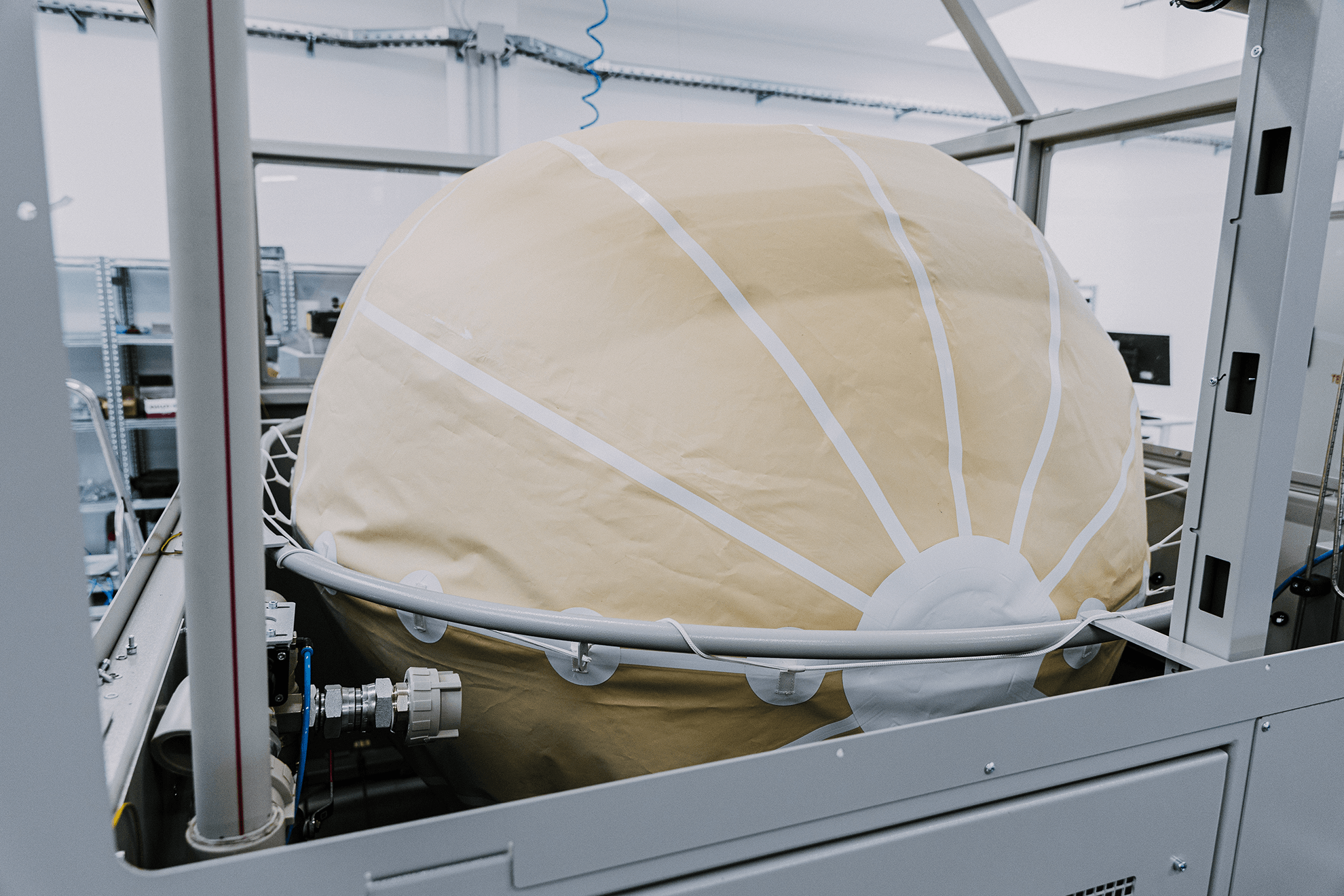
- Collection vessel (buffer tank or balloon): where the recovered gas is accumulated safely before processing.
- Gas analyser/concentration measurement: to verify how much of the returned gas is helium and to control the recovery logic.
- Purification stage(s): tailored to your contamination profile and target quality. This can include:
- Removal of moisture, oil vapour, particles, and other process contaminants
- Optional removal of other gases to increase helium concentration, where higher helium mixes are required
- Optional compressor and additional storage: used when your process requires recovered gas to be pressurised and stored in cylinders/tanks, or when you want separate storage for different target concentrations.
- Monitoring and control system: to track concentration, pressure, flow, alarms, and overall performance in real time.
The right configuration depends on your helium flow rate, operating hours, exhaust stream concentration, contamination risks, and the target reuse method.
Custom built vs. modular standalone models
HRUs are not one size fits all. Some operations need bespoke systems designed around specific workflows, footprint constraints, and purity targets. Others benefit from modular standalone units that can be deployed quickly and scaled as demand grows. At MVS Technologies, we design both, matching the solution to the operational reality, not the other way round.
Where Helium Recovery Units add the most value
Helium recovery is useful across many industries, but the strongest business cases typically appear where helium use is frequent, continuous, or complex to schedule around deliveries.
Aerospace
In aerospace, helium is used for tasks such as pressurisation, purging, and testing critical components. Large test campaigns can consume significant volumes of helium, making recovery attractive for both cost control and supply resilience.
Automotive and e-mobility
Leak testing has become crucial in automotive manufacturing, particularly for EV battery trays, cooling circuits, and sealed enclosures. Helium's small molecular size and inert behaviour make it excellent for detecting very small leaks. High volume production lines can generate substantial helium losses if gas is vented after each cycle.
Real world challenges HRUs help address
Helium supply has experienced repeated disruptions and price volatility over the past decade. For manufacturers, that can translate directly into production risk: a missed delivery or constrained allocation can stop a line, delay qualification testing, or force emergency purchasing.
An adequately designed HRU reduces dependency on external supply by recovering a large share of the helium you already use. Depending on the process, recovery rates can be very high - often up to around 95% - turning an exposed, variable cost into a controllable internal loop.
Benefits of using Helium Recovery Units
Cost savings and fast payback
By cutting fresh helium purchases and reducing emergency spot buys, HRUs can deliver rapid payback in high consumption environments. While ROI depends on usage, concentration, and helium pricing, we have seen cases where a system could pay back in as little as three months.
Operational stability
Helium recovery system benefits also include operational stability. When your production line no longer depends on external helium supply chains, you gain scheduling predictability. Maintenance windows become easier to plan, quality control processes run without interruption, and engineering teams can prototype or test without rationing gas usage. This operational resilience proves particularly valuable during geopolitical disruptions or seasonal supply constraints that historically plague helium markets.
Sustainability and resource stewardship
Helium is a finite resource; once vented, it is effectively lost for practical purposes. Recovery measurably reduces waste and supports credible resource efficiency goals, especially relevant for organisations reporting on sustainability performance.
MVS Technologies' expertise in helium recovery
At MVS Technologies, we design helium recovery solutions around your process rather than forcing a standard template. Whether you need to recover a helium containing gas mixture for direct reuse or require purification and concentration to meet stricter specifications, we engineer systems that integrate cleanly into existing workflows.
Our support spans feasibility assessment, sizing, installation, and after sales service, so your recovery performance remains consistent in day to day production.